Tewksbury and Worcester
State Hospitals have made a commitment to reduce and eventually eliminate
restraint and seclusion. Recent events have influenced this decision. For
example, in May of 2003 Massachusetts sent a delegation of Department of Mental
Health (Massachusetts' DMH) employees and consumer/survivors of mental health
services to a conference in Philadelphia sponsored by the National Association
of State Mental Health Program Directors, (NASMHPD).
NASMHPD policy states that: "Seclusion and restraint should be indicated
only in those individual situations in which an emergency safety need is identified."
The Tewksbury Hospital contingent at the conference consisted of several DMH
employees who are listed in the endnote below* These Tewksbury Hospital workers
were very impressed with NASMHPD's Policy Statement on restraint and seclusion.
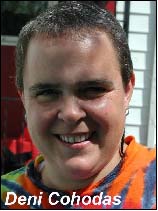
While longtime M-POWER activist, Howard Trachtman and I (Deni Cohodas) represented
the state's mental health consumers.
After the conference the group developed a plan for the reduction of restraint
and seclusion at DMH facilities in Massachusetts. The first phase of this
plan has now begun at Tewksbury and Worcester State Hospitals. The plan will
eventually require all psychiatric hospitals in the state to show they are
making progress in reducing their incidents of restraint and seclusion. The
hope of everyone involved in this initiative is that following the process
will reduce and then eventually eliminate the use of restraint and seclusion
in all DMH facilities in the commonwealth.
The Chief Operating Officers of Worcester and Tewksbury State Hospitals, (Marilyn
Fiedelburg and Tony Riccitelli) have chosen to adopt the exact language of
the NASMHPD Position Statement on Restraint and Seclusion. We feel that the
importance of this development justifies a long quotation from the NASMHPD
position statement on restraint and seclusion, it reads (other than the italics,
which are ours) as quoted below:
(VFC Ed note: The
following statement was approved by the NASMHPD membership on July 13, 1999)
"The members
of the National Association of State Mental Health Program Directors believe
that seclusion and restraint, which includes 'chemical restraints,' are safety
interventions of last resort and are not treatment interventions. Seclusion
and restraint should never be used for the purposes of discipline, coercion,
or staff convenience, or as a replacement for inadequate levels of staffing
or active treatment.
The use of seclusion and restraint creates significant risks for people with
psychiatric disabilities. These include serious injury or death, re-traumatization
of people who have a history of trauma, and the loss of dignity and other
psychological harm. In light of these potential serious consequences, restraint
and seclusion should be used only when there exists an imminent risk of danger
to the individual or others and no other safe intervention is possible.
It is NASMHPD's goal to prevent, reduce and ultimately eliminate the use of
seclusion and restraint and to ensure that, when such interventions are necessary,
they are administered in as safe and humane a manner as possible by appropriately
trained personnel. This goal can be best achieved by: (1) early identification
and assessment of individuals who may be at risk of receiving these interventions;
(2) high quality, active treatment programs (including for example, peer delivered
services) operated by trained and competent staff who effectively employ individualized
alternative strategies to prevent and diffuse escalating situations; (3) policies
and procedures that clearly state that seclusion and restraint will only be
used as emergency safety measures; and (4) effective quality assurance programs
to ensure that this goal is met and to provide an environment and culture
of caring that will minimize the need for the use of seclusion and restraint.
In the event seclusion or restraint becomes necessary, the following standard
should apply to each episode:
· The dignity,
privacy and safety of individuals who are restrained or secluded should be
preserved to the greatest extent possible at all times during the use of these
interventions.
· Seclusion
and restraint should be indicated only in those individual situations in which
an emergency safety need is identified, and these interventions should be
implemented only by competent, trained staff.
· As part
of the intake and ongoing assessment process, staff should assess whether
or not an individual has a history of being sexually, physically or emotionally
abused or has experienced other trauma, including trauma related to seclusion
and restraint or other prior psychiatric treatment. Staff should discuss with
each individual strategies to reduce agitation that might lead to the use
of seclusion and restraint. Discussion could include what kind of treatment
or intervention would be most helpful and least traumatic for the individual.
· Only licensed
practitioners who are specially trained and qualified to assess and monitor
the individual's safety and the significant medical and behavioral risks inherent
in the use of seclusion and restraint should order these interventions.
· The least
restrictive seclusion and restraint method that is safe and effective should
be administered.
· Individuals
placed in seclusion or restraints should be communicated with verbally and
monitored at frequent, appropriate intervals consistent with principals of
quality care.
· All seclusion
and restraint orders should be limited to a specific period of time. However,
these interventions should be ended as soon as it becomes safe to do so, even
if the time-limited order has not expired.
States should have
a mechanism to report deaths and serious injuries related to seclusion and
restraint, to ensure that these incidents are investigated, and to track patterns
of seclusion and restraint use.
NASMHPD also encourages facilities to conduct the following internal reviews:
(1) quality assurance review to identify trends in seclusion and restraint
use within the facility, improve the quality of patient outcomes, and help
reduce the use of seclusion restraint; (2) clinical reviews of individual
cases where there is a high rate of interventions; and extensive root cause
analyses in the event of a death or serious injury related to seclusion and
restraint. To encourage frank and complete assessments and to ensure the individual's
confidentiality, these internal reviews should be protected from disclosure.
NASMHPD is committed to achieving the goals of safely preventing, reducing,
and ultimately eliminating the use of seclusion and restraint by: (1) encouraging
the development of policies and facility guidelines on the use of seclusion
and restraint; (2) continuing to involve consumers, families, treatment professionals,
facility staff, and advocacy groups in collaborative efforts; (3) supporting
technical assistance, staff training, and consumer/peer delivered training
and involvement to effectively improve and/or implement policies and guidelines;
(4) promoting and facilitating 'best practices' and model programs. In addition
NASMHPD supports further review and clarification of developmental considerations
(for example, youthful and aging populations) that may impact clinical and
policy issues related to these interventions."
(VFC Ed. note: End
of quote from NASMHPD restraint and seclusion position statement.)
On November 13, 2003, Tewksbury State Hospital held a forum to kick off their
new restraint and seclusion initiative. At the forum Marilyn Feidelburg, Ellen
Flowers, Dr. Robert Welch, and Linda "Gigi" Alley and I spoke. I
spoke about my experience in restraint at Newton-Wellesley Hospital. Gigi
spoke about her experience with a three day period of seclusion at Tewksbury
State Hospital. I described my experience this way, "The last time I
was in restraints was in early 1997. I had just been transferred from St.
John's hospital in Lowell to Newton-Wellesley's Psychiatric Unit after a serious
suicide attempt. I would not contract for safety when asked to; I was placed
in four point restraints. I was not asked if I wanted to talk even though
it was late in the evening and the unit was quiet, the halls empty. I was
kept in restraints until the morning. I could not sleep even though I wanted
to. No-one came in to talk to me, to ask me if I could commit to safety after
restraints. I was bruised on my chest and shoulders because of the suicide
attempt. Restraints made the pain worse. No one came in to talk to me. I was
all alone in a world so cold."
"I believe that restraints feel the same to most consumer/survivors;
they do not feel like treatment, they feel like torture. There you are once
again not being listened to, not being comforted, not being treated."
"Being in restraints for a trauma survivor like me is scary. It re-creates
the trapped feelings of the abuse and of the isolation. You are in a vulnerable
position whether face up or face down. Like during the abuse, you are not
in control of your body, someone else is."
At the same Tewksbury forum Linda Alley, a Peer Advocate with M-POWER, described
her experience of seclusion at Tewksbury State Hospital. Linda said: "Although
I have been placed in seclusion on several occasions; I have never been violent.
The last time I was in seclusion, it was for a period of 2-3 days, after a
poorly thought out reaction to a suicide attempt.
I'm not sure what the hoped for response was, which they expected to come
from me. My interpretation, however, was to feel shamed, punished, and that
I was perceived as a bother, almost too much trouble to keep alive. The doctor
who was called to respond to this crisis refused even to look at me; he addressed
the nurse as if I was an inanimate object, or completely invisible. For those
48-72 hours, no one spoke to me besides my psychiatrist."
"By comparison, at a different hospital, my suicidality was met with
a suicide prevention protocol, which provided me with a companion, 24 hours
a day, not more than an arms length from me at any given time. I was permitted
to move around, attend groups, and speak and dine with other patients if I
chose to. I was encouraged to utilize my 'companion' as a counselor, someone
to voice my pain to, and to strategize with. And although I know that I required
a lot of extra attention, I was made to feel worthy of it. 'We' were a team
and 'we' would get through this difficult time. It was at this facility that
I began to make real progress."
"Keeping people alive, and helping people recover, is a labor intensive
endeavor. I was not an easy patient. I spent more than a decade bouncing around
the system, and each time I was treated as a person who was asking for too
much from staff. I constantly drifted a little farther and farther from my
sense of myself as a worthy human being. When I was being treated at the second
facility, which I spoke of before, I felt more like a dog being taken to a
pound than a human being. Later on, at the other facility, I was shocked and
amazed to be seen and treated with compassion."
"Seclusion is not a compassionate response to a person whose behavior
is unacceptable. Life is all about relationships; other people make our lives
meaningful. When any person, much less a vulnerable and confused person, is
denied access to others, it is perceived as punishment, not treatment. I know
what worked for me. I don't claim to know what will work for others, and I
am aware of how difficult people can be. There must be something else that
can work though. If we could just look closer and commit ourselves to finding
the answer that will be a better, more effective alternative, and really aren't
we, aren't all of us, worth the effort?"
Linda's perspective has been common for decades among those consumers who
have personally experienced seclusion and restraint, or who have seen it practiced
on others. For example, as early as 1976 consumer/survivors had demanded the
abolishment of restraint and seclusion, and they had not, even at that time,
viewed restraint and seclusion as a legitimate mental health treatment. For
one early documented example of consumer attitudes about this issue consider
the North American Conference on Human Rights and Psychiatric Oppression,
which took place in Boston Massachusetts in May of 1976. Members of the first
psychiatric survivors' organization in Massachusetts, the Mental Patients
Liberation Front, were in attendance at this event. At the close of this conference
consumer/survivors and ex-patients made the following written demand: "We
demand an end to the physical abuse of mental patients. We demand an end to
the practices of seclusion and restraint."
This demand was published in the Madness Network News, which was the most
significant consumer/survivor publication available in Massachusetts at that
time. Later on, in 1989, M-POWER also began a campaign to reduce and (it was
hoped) eventually eliminate restraint and seclusion in all DMH facilities
in the state. By May 20, 1993, M-POWER and its allies had convinced then DMH
Commissioner, Elaine Elias to change the Department of Mental Health's policies
regarding seclusion and restraint. As a direct response to a long campaign
against restraint and seclusion, which was organized and led by the Lowell
Chapter of M-POWER, the DMH wrote and announced the implementation of their
new restraint policy. It is known as Policy 93-1.
Policy 93-1 contains
the following guidelines.
· Patients
in restraint and seclusion must be fully clothed in a way that respects their
dignity as patients express it and in a way that poses no threat of harm.
· Whenever
possible, patients in restraint and seclusion should be allowed to use the
bathroom and to use a male attendant for a male patient, and a female attendant
for a female patient.
· Staff will
help patients calm down by talking to them or by using other non-violent means
prior to deciding to use restraint or seclusion.
· If restraint
and seclusion is necessary, staff will continue to talk to patients to help
them calm down or use other non-violent interventions.
· Patients
will be held for no more than ½ hour without a break unless they are
a violent threat to themselves and/or others, except when a patient is asleep.
· Patients
who are quiet in restraints and seclusion will be allowed up for a free trial
period. If they express verbally and behaviorally that they have regained
control during this trial period they will not be put back in restraint and
seclusion.
· Staff should
experience restraint as part of their training.
Despite this change
in their restraint and seclusion policy, which was made in response to the
campaigning of M-POWER, other consumer/survivor groups, and our non-consumer
allies, the Department of Mental Health has rarely, if ever, followed Policy
93-1. This fact is demonstrated by the experience of Linda Alley and others,
who were quoted earlier on in this article.
Additional violations of Policy 93-1 have been reported; for instance, as
early as 2002 patients were reporting that they were not given temporary release
to use the bathroom while being held in seclusion and/or restraints. Nor were
many of these and other patients even given a bedpan while they were bound
in restraints or locked in seclusion. Hospital staff-people responded to this
situation by claiming that they did not have an adequate supply of bedpans
for face-down restraint procedures.
As a result of these incidents and the complaints they generated, the human
rights officer at Tewksbury State Hospital requested that the hospital place
an order for sufficient numbers of bedpans to accommodate those patients subjected
to face-down restraint procedures. Yet despite this brutal history of policies
made and not followed, I am hopeful for the future as I report to you now
on the latest news about restraint and seclusion as it is currently being
practiced at two state hospitals in Massachusetts. I am hopeful now, because
it is planned that these new practices will eventually be adopted at every
DMH facility in Massachusetts. I have real hope that the items listed below
represent just the smallest, first movements towards the beginning of the
end of restraint and seclusion.
· Under the
new DMH initiative to reduce and eventually eliminate restraint and seclusion;
Tewksbury State Hospital is working on plans to close half of the restraint
rooms in order to turn them into what amounts to a new concept in treatment,
which is now being called the comfort room.
· Patients
at the hospital have had input into what kinds of items and wall designs the
comfort rooms will contain. A comfort room might have pillows, soft piped
in music, art supplies, rocking chairs, wall murals or other things, which
are calming to those spending time inside the room.
· Tewksbury
State hospital will involve patients who are interested in painting the wall
murals in the comfort rooms.
· Another
initiative that Tewksbury Hospital and Worcester State Hospital are undertaking
is the posting of data in worker's offices, which will graphically illustrate
the current rates of seclusion and restraint incidents tallied from the recent
records of each hospital ward.
· The experience
of other states that have employed this practice shows that it has been an
effective method for reducing restraint and seclusion. Posting the rates seems
to foster competition amongst various hospital wards as the workers from different
units compete in order to see that their unit might have the lowest posted
rate of restraint and seclusion incidents at the hospital during any given
week or month.
· Restraint
and seclusion will also be an agenda topic each and every day at each and
every staff meeting at both Worcester and Tewksbury State Hospitals.
· In addition,
when the traditional methods for applying restraint and seclusion are taught
to workers, Tewksbury and Worcester State Hospitals have also provided de-escalation
of tension and de-escalation of conflict trainings. In the past 20% of the
time and resources spent at these trainings was devoted to conflict de-escalation
practices, while 80% of the time was geared towards teaching restraint and
seclusion application methods. However, the emphasis at these trainings has
changed a great deal under the new DMH initiative to reduce and eliminate
restraint and seclusion. The trainings on restraint and seclusion at both
hospitals are now comprised of 80% de-escalation and conflict mediation practices,
and 20% restraint and seclusion application methods.
· Tewksbury
and Worcester State Hospitals have and will continue to provide alternative
dispute resolution (mediation) training to all employees who work with patients.
· Tewksbury
and Worcester State Hospitals will debrief staff immediately after an incident
of restraint or seclusion.
· Tewksbury
and Worcester State Hospitals will each hire a half time Patient Liaison to
debrief patients after restraint and seclusion incidents. These patient liaisons
will also train staff and patients in alternative dispute resolution methods
(mediation).
The consumer movement
commends the Department of Mental Health's commitment to reduce and eventually
eliminate restraint and seclusion, and we also commend the Department's admission
that restraint and seclusion is a treatment failure. It is an announcement
and policy stance, which has been long awaited by the consumer/survivor community.
At the end of her speech on November 13th, (when Tewksbury State Hospital
held a forum to kick off their new initiative to reduce and eliminate restraint
and seclusion) this writer (Deni Cohodas) made the following statement: "I
am so glad that the Department of Mental Health has joined the consumer/survivor
community in recognizing that restraint and seclusion are treatment failures.
I cannot describe the elation of being here today as a witness to your efforts
to end the violence. I wrote a long poem about coercion once. The end of the
poem said 'the violence is over, we are community.' I recognize that although
it took many more years for the Department of Mental Health to realize that
restraint and seclusion are treatment failures, I am ecstatic that you now
have. I wish today that a giant banner was hung from the ceiling saying, 'The
violence is over, we are community.' Today we have taken the steps together
to become a community and put an end to needless suffering."
Congratulations are in order to the Department of Mental Health from the consumer/survivor
and ex-patient community.
Back
to Voices for CHANGE Issue #8 Table of Contents